Ninja Turtles: Legends
- 4.5
- Rating
- 50.00M
- Installs
- Free
- Price

 Analysis by App-foxy
I spent time with Ninja Turtles: Legends as a character-focused role-playing game built around Leonardo, his brothers, and the wider mutant cast. The appeal is immediate if you already enjoy the Turtles: the game puts the familiar heroes at the center of a fight against the Kraang, while turning their adventures into a team-building experience rather than a simple arcade brawler. I found it easy to understand at first, but there is more to consider once progress starts depending on how carefully I use my resources.
That balance matters because this is a free game with optional purchases ranging from $0.99 to $99.99 per item. I could begin without paying, which makes it approachable, but the spending range is important context before anyone treats it as a completely frictionless experience. My overall impression is positive for fans who like collecting characters and improving a squad over time, although I would not recommend it equally to someone looking for a fast, purely skill-based action game.
How the Turtles turn into a long-term RPG
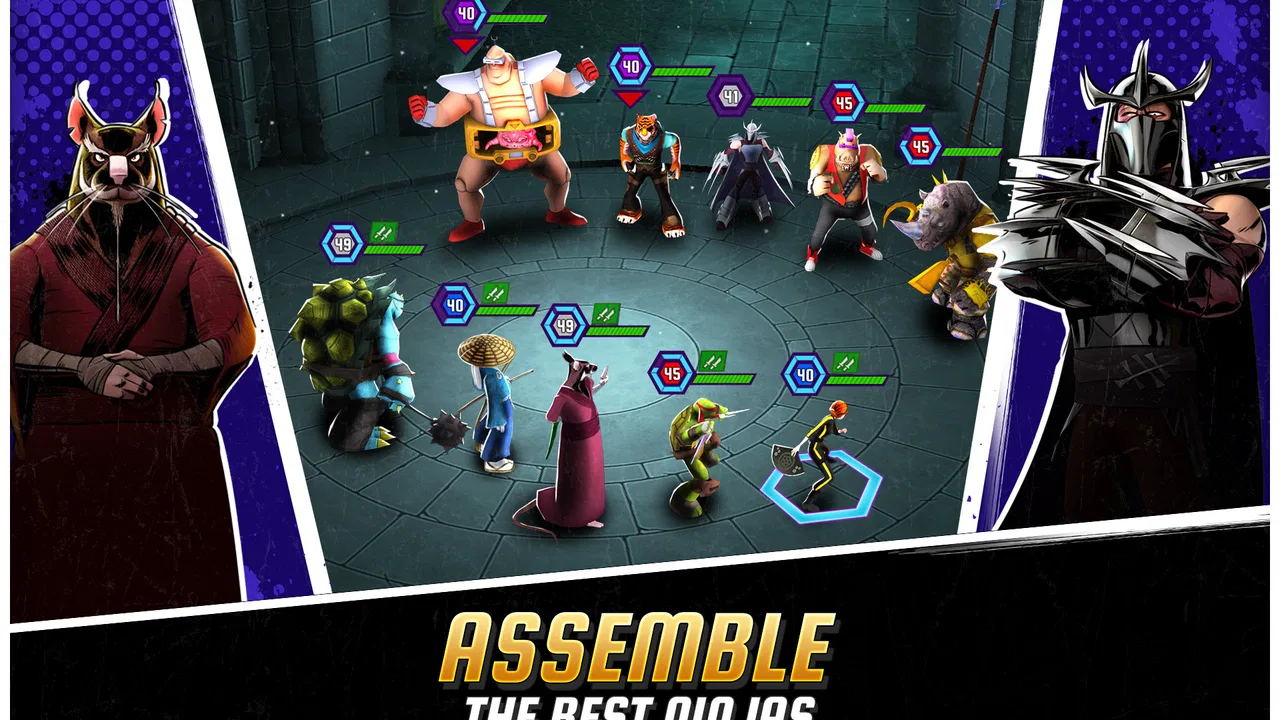
The central idea is straightforward: assemble a group of Ninja Turtles and allies, then take them through battles where team choices matter. Leonardo provides the story’s familiar anchor, but the experience is not limited to controlling one hero. The fun comes from thinking about the group as a whole, deciding which characters deserve attention, and making progress through repeated encounters.
You May Also Like

 AccuWeather: Weather Radar
AccuWeather Review: A Quick, Clear Forecast for Everyday Decisions
For everyday plans, the best forecast is the one you can understand quickly. AccuWeather makes rain timing, radar, and local conditions easy to act on, with a few trade-offs.

 Hill Climb Racing
Why Hill Climb Racing Still Turns Crashes Into One More Run
A tiny car, a bumpy hill and one more upgrade: Hill Climb Racing keeps resurfacing because its simple chaos makes every near-miss feel personal.

 AliExpress - Shopping App
AliExpress Makes Global Shopping Feel Personal, but Shoppers Bear the Risk
AliExpress turns a global marketplace into a pocket-sized discovery engine. Its reach is useful, its shopping loop compelling, and its trade-offs easy to miss.

 Lords Mobile: Kingdom Wars
Lords Mobile Is a Kingdom-Building Routine, Not a Quick Match
A case-by-case verdict on the building, battles, device demands, and social commitments that make Lords Mobile rewarding for some players and exhausting for others.

 PDF Scanner app - TapScanner
TapScanner Makes Paperwork Easier to Capture, Check, and Share
TapScanner makes scanning with a phone feel less like a rescue operation and more like a dependable step in getting work done. Its capture tools are useful, though not flawless.

 Block Blast!
 Shows How Much a Puzzle Game Can Leave Out
A quiet grid game shows why puzzle players increasingly value instant clarity, repeatable skill and low-pressure play—and where the genre still needs to catch up.
More From Our News Desk
View All News


That structure gives the game a different rhythm from a traditional console-style Turtles title. I am not mainly reacting to enemies in real time or moving through a short sequence of stages. Instead, I am preparing a team, choosing how to approach the next challenge, and watching the results of those decisions. It feels closer to a collection-driven RPG than to a direct adaptation of the classic beat-'em-up formula.
The story premise helps keep that loop recognizable. Leonardo is trying to save his brothers and fellow mutants while dealing with the Kraang, so the campaign has a clear reason for bringing different characters together. Even when the individual battle decisions become familiar, the Turtles setting gives the progression a sense of purpose that a generic fantasy roster would not provide.
I also appreciate that the game works well in short sessions. A player can make a little progress while waiting for an appointment, riding public transport, or taking a break from work. The structure does not demand the same uninterrupted attention as a long action game. That makes it a practical choice for fans who want regular contact with the franchise rather than one extended play session.
At the same time, short-session design can become repetitive. Battles are enjoyable when I am making meaningful team decisions, but less satisfying when the outcome feels predictable and I am simply repeating a familiar routine. The game is strongest when I treat each encounter as a small planning problem rather than rushing through every available activity.
What makes the team-building worthwhile
The most useful habit I developed was resisting the urge to improve every character equally. A growing roster can make that tempting, especially when a new favorite appears, but spreading resources too thin can leave the main group underprepared. I had a better experience when I chose a dependable core and treated other characters as situational options until I had a clear reason to invest in them.
This is one of the less obvious lessons of the game: collecting more heroes does not automatically make the team stronger. A larger roster gives flexibility, but progress still depends on developing a group that works together and can handle the current challenge. For a new player, that means it is worth pausing before spending upgrade materials simply because a character is recognizable or visually appealing.
I would also play the early stages as a learning period instead of trying to optimize everything immediately. The opening portion is the right time to notice how the game expects me to build a team, how quickly upgrades affect performance, and which characters I genuinely enjoy using. Saving some resources until those patterns become clear is more useful than making every decision based on first impressions.
That approach is especially relevant because the developer, Ludia Inc., has positioned this as a substantial mobile RPG rather than a tiny one-off game. Its average rating is 4.5 from around 599 thousand ratings, and the game has passed 50 million installs. Those figures suggest a broad audience, but they do not remove the need to decide whether the long-term progression style suits you.
Where progress begins to feel demanding
My main reservation is the pressure that can appear when improvement slows down. In a collection-based RPG, early gains tend to feel rewarding because almost every new character or upgrade changes the team. Later, each improvement can require more patience, more careful resource use, or a willingness to repeat content. That transition is normal for the genre, but it is also where casual players may start feeling that the game is asking for more commitment than expected.
I would not describe the experience as a quick game that happens to have Turtles on the screen. It is designed around returning, building, and gradually strengthening a roster. If you want a complete adventure that can be finished in a few evenings, this is probably the wrong format. A conventional action game will give you more immediate control and a clearer endpoint.
The current version is 1.27.1, and the game supports devices running Android 7.0 or later. That makes the technical entry point relatively accessible for compatible Android users, but compatibility alone does not tell me whether an older phone will feel comfortable during longer sessions. I would still keep expectations sensible on aging hardware, particularly if I prefer quick loading and smooth menu navigation.
The Teen content rating is another useful signal. I would see it as a better fit for teenagers and adults who already understand the rhythm of free mobile RPGs than for young children who may not recognize the difference between progress earned through play and progress accelerated through a purchase. Parents should discuss spending before handing over a device, especially because individual items can reach $99.99.
Spending, convenience, and the free starting point
Because the game is free to download, I could test its basic appeal without committing money. That is a real advantage: I can find out whether the battles, character collection, and Turtles presentation hold my attention before deciding whether the game deserves any spending. I recommend using that opportunity rather than buying something during the first enthusiastic session.
The purchase range changes the conversation once optional spending enters the picture. A small purchase and a $99.99 item represent very different decisions, so I would treat every offer as a convenience choice rather than an essential part of being a fan. The safest approach is to play long enough to understand the normal pace first, then decide whether a purchase solves a specific frustration or merely encourages another round of spending.
I found it helpful to separate enjoyment from acceleration. If I liked a character or a battle team, that enjoyment existed before any purchase. Paying can make progress feel faster, but faster progress is not automatically better progress if it removes the satisfaction of planning and gradual improvement. For me, the game is more rewarding when I make a clear goal and play toward it instead of buying simply because a difficult stage is inconvenient.
There is also a practical trade-off for families. The free entry makes the game easy to try, but the presence of purchases means the device owner should control buying decisions. I would not leave that to chance. Establishing a rule before play is simpler than trying to explain an unexpected charge afterward.
Is the experience fair for players who do not spend?
I approach this question carefully because fairness in a free RPG depends on how a person defines a satisfying pace. A player who accepts gradual collection and repeated improvement can enjoy the game without treating every delay as a problem. Someone who wants immediate access to a powerful, complete roster may find the free route less comfortable, particularly when progress starts to feel slower.
In my view, the game works best for non-spenders who enjoy making choices with limited resources. That means prioritizing a main squad, accepting that some characters will wait, and not measuring success by how quickly another player appears to advance. The collection itself becomes part of the challenge. If that kind of restraint feels frustrating, a paid premium RPG with a fixed price may be a better fit.
I would not call the purchase system a reason to avoid the game automatically, but I would not ignore it either. The broad price range means the game can appeal to both light users and committed spenders, while also creating different expectations about progress. My recommendation is to decide on a personal spending limit before starting, then judge the game by how enjoyable it remains within that boundary.
Competitive fairness is a separate concern from campaign enjoyment. If your main goal is to compare your strength with other players or chase rankings, you should think more carefully about how spending might affect that experience. If you are mainly here for the Turtles, team construction, and story-driven progression, the question is less about beating everyone else and more about whether your own squad develops at a pace you can accept.
That distinction is important because the game is not the best choice for someone who needs every player to operate under identical conditions. A single-player-focused adventure with a fixed progression path would offer a cleaner sense of fairness. Ninja Turtles: Legends is better suited to people who are comfortable with a flexible mobile model where time, planning, and optional purchases can influence how quickly a roster grows.
Small decisions that improve the daily experience
My first practical tip is to keep a simple mental record of which characters are doing dependable work instead of changing the team after every new unlock. Familiarity matters. A squad that I understand is often more useful than a collection of individually appealing heroes that I have barely developed. This also reduces wasted resources and makes difficult encounters easier to diagnose.
Second, I would avoid spending immediately after a frustrating loss. A defeat can make an offer look more valuable than it really is. Before buying anything, I would replay the stage with a different team arrangement, reconsider which character receives upgrades, and check whether the problem is poor preparation rather than a permanent power gap.
Third, I would use short sessions deliberately. Rather than opening the game whenever I feel bored and making random progress, I would set a small objective: improve one key character, complete a particular part of the campaign, or test a different team combination. This keeps the collection loop from becoming a vague habit and makes the free experience feel more controlled.
Finally, I would treat favorite characters and effective characters as two separate categories. It is perfectly reasonable to keep a beloved Turtle in the squad even if another option is more efficient. The important thing is to understand that choice as a trade-off. The game becomes more personal when I play with characters I like, but progress may be smoother when I reserve some team slots for practical reasons.
Who should install it, and who should skip it?
I would recommend it to a Turtles fan who enjoys role-playing systems, gradual collection, and making a squad stronger over time. It is also a good match for someone who wants a mobile game that can be checked in short bursts rather than requiring a long uninterrupted campaign. The familiar cast gives the progression a stronger identity than many interchangeable team-building games.
I would be more cautious with players who want direct action, precise movement, or a traditional beat-'em-up experience. The name may suggest that kind of game, but the actual appeal is in managing a roster and planning battles. If your favorite part of the franchise is fast combat with immediate controller feedback, a different Turtles game would probably satisfy you more quickly.
I would also skip it if you dislike free-to-play pressure in principle, even when purchases are optional. The price range makes that concern reasonable, and no amount of affection for Leonardo can guarantee that the progression style will feel comfortable. A premium role-playing game with a clear upfront cost may be a better choice for players who want predictable access and fewer spending decisions.
For parents, the Teen rating should be taken seriously. The game can be a fun way for an older child or teenager to engage with the franchise, but spending boundaries need to be explicit. I would also make sure the player understands that collecting characters and improving them is designed to continue over time, not deliver every reward immediately.
My verdict after weighing the trade-offs
After looking at both the entertainment and the pressure points, I see Ninja Turtles: Legends as a solid choice for a specific kind of fan rather than a universal recommendation. Its strongest qualities are the recognizable Turtles setting, the team-building focus, and the ability to make small amounts of progress during ordinary daily downtime. I enjoyed it most when I approached each session with a plan instead of chasing every possible improvement.
The limitations are equally clear. Progress can become demanding, repeated battles may lose their freshness, and optional purchases create a spending question that players should answer for themselves before they get deeply invested. The free starting point is useful, but it does not turn the game into a simple, fixed-content adventure. The Teen rating and the purchase range make adult guidance sensible for younger players.
Its 4.5 average and large install base show that the game has reached a wide audience, but popularity is not a substitute for matching the right play style. I would choose it over a generic mobile RPG when the Turtles themselves are part of the reason I want to play. I would choose a premium alternative when I want a defined adventure, a stable price, and no need to think about accelerating progress.
My trust verdict is favorable with boundaries: try the free experience, build a focused team, and decide on spending only after you understand the normal progression. If you enjoy patient roster development and can ignore the urge to solve every obstacle with a purchase, this is an entertaining mobile RPG with a clear identity. If you want instant action or a completely even, purchase-free progression path, it is better to look elsewhere.
For the right player, Ninja Turtles: Legends feels like a long-running companion to the franchise rather than a brief novelty. I would recommend it to a friend who likes collecting, planning, and checking in regularly, while being upfront that the experience asks for patience. That honesty is the key: the game is worth trying for Turtles fans, but it is most enjoyable when the player remains in control of the pace and the budget.
FAQs for Ninja Turtles: Legends
01What is Ninja Turtles: Legends about?
Ninja Turtles: Legends is a mobile RPG game where players embark on a thrilling adventure with the Teenage Mutant Ninja Turtles. The objective is to battle against iconic villains from the TMNT universe, complete missions, and collect various characters to build a powerful team. The game offers turn-based combat and a rich storyline.
02Is Ninja Turtles: Legends free to play?
Yes, Ninja Turtles: Legends is free to download and play. However, it includes in-app purchases that allow players to buy in-game currency, characters, and power-ups. These purchases can enhance gameplay but are not necessary to enjoy the full game experience. Players can turn off in-app purchases in their device settings.
03What platforms is Ninja Turtles: Legends available on?
Ninja Turtles: Legends is available on both Android and iOS platforms. You can download it from the Google Play Store for Android devices and the Apple App Store for iOS devices. Ensure your device meets the minimum system requirements for optimal performance and gameplay experience.
04How can I unlock new characters in Ninja Turtles: Legends?
Characters in Ninja Turtles: Legends can be unlocked by progressing through the game's missions, participating in special events, and using in-game currency to purchase character packs. Each character has unique abilities and can be leveled up to become more powerful, enhancing your team's overall performance in battles.
05Does Ninja Turtles: Legends require an internet connection?
Yes, Ninja Turtles: Legends requires an internet connection to play. The game features online components, including events and updates, that need connectivity to function properly. It is recommended to have a stable internet connection to ensure seamless gameplay and avoid any interruptions.
Pros
- Engaging storyline with classic TMNT characters.
- Diverse missions keep gameplay fresh and exciting.
- High-quality graphics enhance the gaming experience.
- Wide variety of characters to collect and upgrade.
- Regular updates with new content and challenges.
Cons
- In-app purchases can be quite expensive.
- Energy system limits extended play sessions.
- Requires a stable internet connection to play.
- Some missions can feel repetitive over time.
- Ads can be intrusive during gameplay.

Ninja Turtles: Legends
Gallery